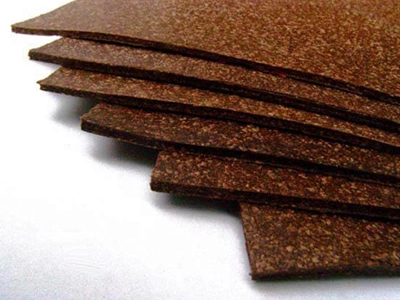
Nitrile cork is a composite material that combines the outstanding oil and grease resistance of nitrile rubber with the high sealing factor, thermal insulation and acoustic insulation capacity of cork. At Everest Rubber, we manufacture nitrile cork sheets and nitrile cork gaskets in two forms: fine grain and coarse grain. ISO 9001 certified manufacturer with fast delivery across the USA.

Fine Grain Nitrile Cork
It is the option to consider when the combination of deteriorating as high temperature chemical attack and change ineffective the rest of elastomeric materials. Used in the petrochemical and food industry processes.
The outstanding resistance of nitrile to oil and grease combines with the high sealing factor of cork to give a compound of high reliability and elasticity; it comes in two forms: Coarse Grain and Fine Grain.
Cork with Nitrile on Plate
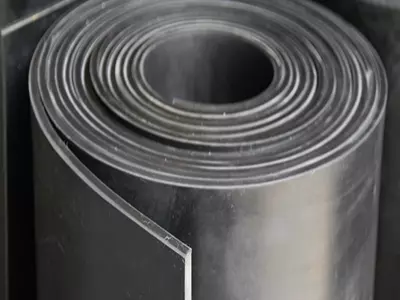
Cork with nitrile sheet. Nitrile sheets with cork that due to their ingenious combination of physical properties are used as gaskets or joints with great sealing capacity, also working as thermal insulators and offering a great resistance to grease, oils, solvents and other petroleum derivatives. For pure nitrile rubber, see nitrile for electrical transformers.
Physical and Chemical Properties: Fine Grain Nitrile Cork
- Shore “A” hardness: 60-65
- Tensile strength, minimal: 300 PSI
- Elongation, minimal: 200 %
- Temperature Range: -13°F to 230 °F
- Oils: Excellent
- Acids: Medium
- Outdoors: Good
- Abrasion: Bad
It is used to manufacture gaskets, seals, wheels or gaskets where a good resistance to oils and greases offered by Nitrile is required with the flexibility and sealing and thermal and acoustic insulation capacity of cork.
Product Dimensions
- Plate: 3'3" x 3'3", in 1/16" to 1" thickness
Features
- Sealing capacity
- Thermal insulation
- Resistance to hydrocarbons
- Highly flexible
- Excellent Weather Resistance
- Excellent Resistance to Petroleum Derivatives

Coarse Grain Nitrile Cork
The extraordinary resistance of Nitrile to oil and grease is combined with the high sealing factor of cork to provide a highly reliable and elastic compound; it is presented in two forms: coarse grain and fine grain.
Coarse grain nitrile cork has a more textured surface, making it suitable for applications where a higher degree of compressibility or thermal insulation is needed. It is ideal for large gaskets, thermal breaks and acoustic insulation panels. For acoustic applications, see acoustic insulation.
Physical and Chemical Properties: Coarse Grain Nitrile Cork
- Shore “A” hardness: 60-65
- Tensile strength, minimal: 300 PSI
- Elongation, minimal: 200 %
- Temperature Range: -13°F to 230 °F
- Oils: Excellent
- Acids: Medium
- Outdoors: Good
- Abrasion: Bad
Product Dimensions
- Plate: 3'3" x 3'3", in 1/16" to 1" thickness
Frequently Asked Questions about Nitrile Cork
What is nitrile cork?
Nitrile cork is a composite material that combines the outstanding oil and grease resistance of nitrile rubber with the high sealing factor, thermal insulation and acoustic insulation capacity of cork. It is available in two forms: fine grain and coarse grain.
What is nitrile cork used for?
Nitrile cork is used to manufacture gaskets, seals, wheels and joints where good resistance to oils and greases is required, along with the flexibility, sealing and thermal/acoustic insulation capacity of cork. Ideal for the petrochemical and food industries.
What is the temperature range of nitrile cork?
Nitrile cork has a temperature range of -13°F to 230°F (-25°C to 110°C). It offers excellent oil resistance, medium acid resistance, good outdoor resistance and poor abrasion resistance.
What is the difference between fine grain and coarse grain nitrile cork?
Fine grain nitrile cork has a smoother, more uniform texture ideal for precision gaskets and seals. Coarse grain nitrile cork has a more textured surface, suitable for applications where a higher degree of compressibility or thermal insulation is needed. Both share the same oil and grease resistance.