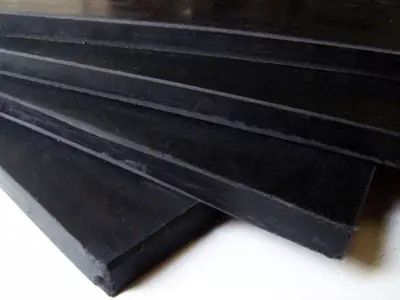
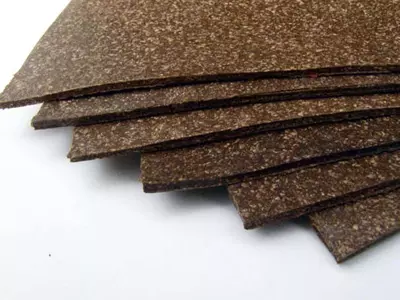
Dielectric rubber is a specially formulated elastomer with a high insulation factor, designed to prevent electric shocks and protect machinery from electrostatic discharges. At Everest Rubber, we manufacture dielectric rubber sheets, dielectric rolls, antistatic rubber flooring and conductive rubber for electrical insulation and ESD protection. ISO 9001 certified manufacturer with fast delivery across the USA.

High Dielectric Strength Rubber for Electrical Safety
Specially formulated elastomer for a high insulation factor, it is used in subestation floors or in any application requiring a high dielectric strength value.
Black dielectric rubber is a material that insulates and prevents electric shocks and protects machinery from electrostatic discharges. This material is perfect for insulating electrically sensitive equipment, increasing the safety of the environment where it is installed.
Dielectric rubber in a high quality rubber floor, designed to protect workers from electric shock in high voltage equipment and switchboard areas. It is slip resistant, prevents slipping and provides maximum safety. For electrical transformers, see nitrile rubber.
Physical and Chemical Properties: Dielectric Rubber
- Shore “A” hardness: 62-68
- Tensile strength, minimal: 550 PSI
- Elongation, minimal: 600 %
- Temperature Range: -13°F a 266°F
- Oils: Bad
- Acids: Medium
- Outdoors: Excellent
- Abrasion: Medium
Product Dimensions
- Plate: 3'3" x 3'3", 1/16" to 3" thickness
- Sheets: 3'3" x 32'9 " long, with 1/16" to 5/16" thickness
- Sheets: 3'3" wide x 16'4" long, with 3/8" to 5/8" thickness

Antistatic Rubber Flooring for ESD Protection
Our anti-static rubber, through a controlled conductivity, lets you download all types ofground static charges, thus, is ideal for assembly lines and integrated circuits that handle all types of chips which is not supported by static electricity.
Our antistatic rubber flooring, through controlled conductivity, allows all types of static charges to be discharged to ground.
Physical and Chemical Properties: Antistatic Rubber
- Shore “A” hardness: 60-65
- Tensile strength, minimal: 1000 PSI
- Elongation, minimal: 400 %
- Temperature Range: -13°F a 221°F
- Oils: Good
- Acids: Medium
- Outdoors: Medium
- Abrasion: Good
We manufacture this magnificent antistatic roll to cover any area that needs to isolate from the small current spikes that go through the human body to other bodies with different charges.
Product Dimensions
- Plate: 3'3" x 3'3", 1/16" to 1" thickness
- Sheets: 3'3" x 32'9 " long, with 1/16" to 5/16" thickness
Antistatic rubber flooring in roll and plate, always useful for workshops involving sensitive electronic equipment, is an ideal solution to prevent electrical devices from being damaged by discharges that directly affect various electronic components and circuits.

Conductive Rubber for Medical & Industrial Use
Our anti-static rubber, through a controlled conductivity, lets you download all types ofground static charges, thus, is ideal for assembly lines and integrated circuits that handle all types of chips which is not supported by static electricity.
Our electrically conductive rubber is capable of transmitting electricity. Therefore, its electrical behavior makes it suitable for medical treatments.
Physical and Chemical Properties: Conductive Rubber
- Shore “A” hardness: 70-80
- Tensile strength, minimal: 1250 PSI
- Elongation, minimal: 350 %
- Temperature Range: -13°F a 221°F
- Oils: Good
- Acids: Medium
- Outdoors: Medium
- Abrasion: Good
Product Dimensions
- Plate: 3'3" x 3'3", 1/16" to 1" thickness
- Sheets: 3'3" x 32'9 " long, with 1/16" to 5/16" thickness
Electrically conductive rubber can transmit electricity. Due to its electrical behavior, it is suitable for medical treatments where the application of electric current to the human body must be dosed. In addition to special industrial applications, such as safety in areas where explosive materials and activities with static charges are handled.
Frequently Asked Questions about Dielectric Rubber
What is dielectric rubber?
Dielectric rubber is a specially formulated elastomer with a high insulation factor, used to prevent electric shocks and protect machinery from electrostatic discharges. It is commonly used in substation floors, switchboard areas and any application requiring high dielectric strength.
What is the difference between dielectric, antistatic and conductive rubber?
Dielectric rubber insulates and blocks electrical current. Antistatic rubber has controlled conductivity to discharge static charges safely to ground. Conductive rubber transmits electricity and is used in medical treatments and explosive environments.
What is dielectric rubber used for?
Dielectric rubber is used for electrical insulation in substation floors, switchboards, high-voltage equipment areas, and any application requiring protection from electric shock and electrostatic discharge.
Is rubber a good electrical insulator?
Yes, rubber is naturally a good electrical insulator. Dielectric rubber is specially formulated to maximize this property, providing high dielectric strength for industrial electrical safety applications.