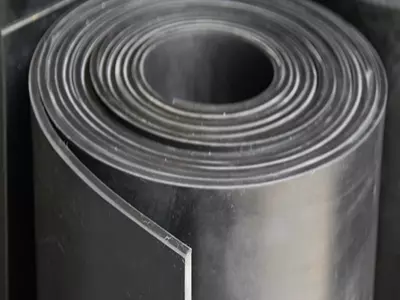
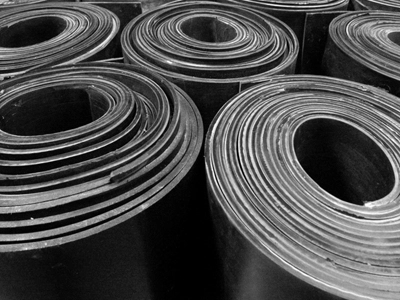
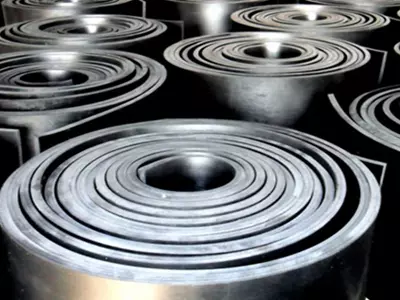
HNBR rubber (Hydrogenated Nitrile Rubber) is a high-performance synthetic elastomer with superior resistance to oils, heat, ozone and chemicals compared to standard nitrile. At Everest Rubber, we manufacture HNBR sheets, HNBR gaskets, HNBR O-rings and custom molded parts for automotive, oil & gas, and industrial sealing applications. ISO 9001 certified manufacturer with fast delivery across the USA.
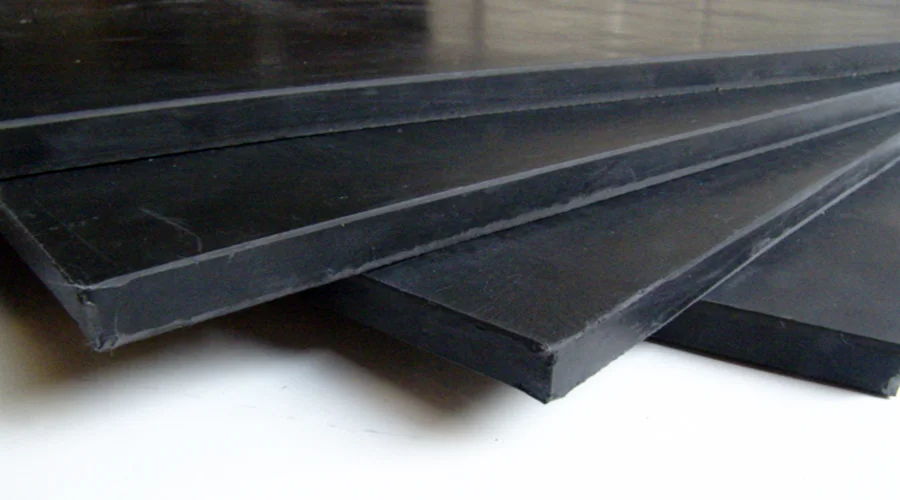
HNBR - Hydrogenated Nitrile Rubber
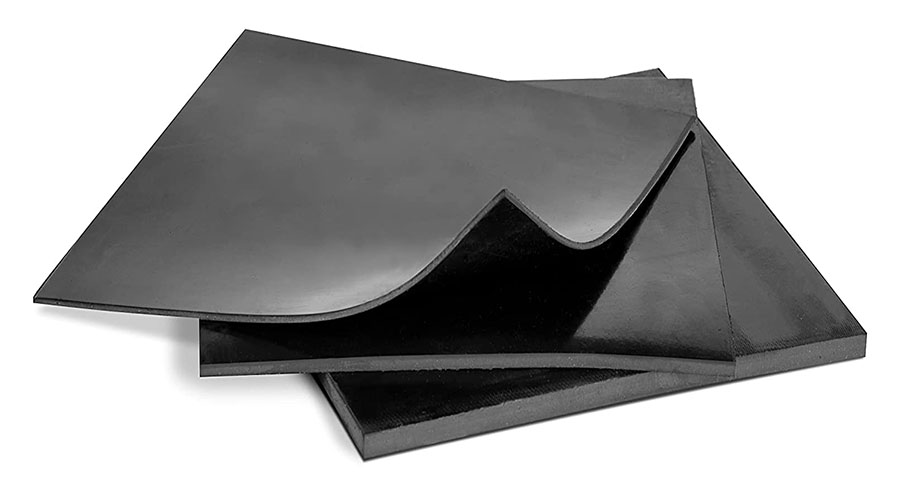
Special nitrile of the highest quality in terms of its operating properties and resistance to oils, greases, hydrocarbons and excellent for making all types of gaskets and flanges that come into contact with the oil of distribution and power transformers; excellent resistance to environmental aging, meets the standards required by transformer manufacturers, useful in automotive gaskets. For electrical transformer gaskets, see nitrile for electrical transformers.
HNBR is widely known for its physical strength and property retention after long-term exposure to heat, oils and chemicals. This type of rubber has a high tensile strength ranging from 21 - 31 Mpa.
What is HNBR?
Hydrogenated nitrile is a synthetic polymer obtained from hydrocarbon rubber chains saturated with hydrogen nitrile. This special hydrogenation process reduces many double bonds in the main NBR polymer chains so that HNBR has superior resistance to heat, ozone, chemicals and superior mechanical characteristics to standard nitrile.
A hydrogenated version of nitrile rubber, HNBR, also known as HSN (highly saturated nitrile) is commonly used for the manufacture of sealing rings for automotive air conditioning systems.
HNBR Physical Properties:
| PARAMETERS | METHOD | SPECIFICATIONS |
|---|---|---|
| SHORE HARDNESS A, Points | ASTM-D2240 | 70 -75 |
| Tensile Strength, PSI | ASTM-D412 | 2000 Minimun |
| Elongation, % | ASTM-D412 | 225 Minimun |
| TEAR, Lb/In | ASTM-D624 | 50 Minimun |
What are the Main Uses of Hydrogenated Nitrile (HNBR)?
HNBR is an elastomer with very particular qualities of high resistance to oils and greases at high temperatures and one of its most widespread uses is in automotive gaskets. HNBR gaskets have excellent resistance to the fluids used in this sector: oils, gasoline, coolants, etc., and are commonly used for the manufacture of gaskets for suspensions and gaskets and mechanical seals for braking systems, as well as for the production of expansion joints. In addition, HNBR gaskets are commonly used in gas generating plants.
In addition to flat gaskets in this type of elastomer, we can supply HNBR O-rings in different hardnesses and formulations.
HNBR Material
Similar to other elastomers, HNBR rubber exhibits compressive hardening strength, good tear strength, good tensile strength, abrasion resistance and high elasticity. Along with these strengths, HNBR rubber also has good resistance to thermal aging and low temperature tolerances compared to other oil and heat resistant elastomers.
With rubber such as nitrile, an increase in acrylonitrile content increases resistance to heat and petroleum-based oils and fuels, but decreases low-temperature performance.
Mechanical and Operational Properties of HNBR
HNBR rubber exhibits a selection of good properties that are not usually found together in elastomers: resistance to thermal aging, oil resistant and flexible at low temperatures. As the automotive industry requires improvements in performance and reliability, this combination of properties forces HNBR rubber to meet more of these requirements.
| PARAMETERS | METHOD | SPECIFICATIONS |
|---|---|---|
| % Change In Hardness @ 150°C, 70 Hours In Oil At ATM3 | ASTM-D471 | -12 Maximum |
| % Change In Stress @ 1150°C, 70 Hours In Oil At ATM3 | ASTM-D471 | -23% Maximum |
| % Change In Elongation 150°C, 70 Hours In Oil At ATM3 | ASTM-D471 | -42% Maximum |
| Operating Temperature | ASTM-D471 | -39 to 140°C |
Chemical Properties
HNBR rubber compounds work well in petroleum-based oils and fuels, aliphatic hydrocarbons, vegetable oils, silicone oils and greases, ethylene glycol, water and steam at 150°C (300°F), and dilute acids, bases and salt solutions at moderate temperatures. HNBR rubber compounds are susceptible to exposure to chlorinated hydrocarbons, esters, ethers, ketones and strong acids. For extreme chemical resistance, see fluorosilicone O-rings.
| PARAMETERS | METHOD | SPECIFICATIONS |
|---|---|---|
| Greases, Oils, Hydrocarbons | ASTM-D471 | Excellent |
| Ozone Light Weathering | ASTM-D1171 | Very Good |
| Acids And Alkalis | ASTM-D471 | Good |
| Resistance To Low Temperatures | ASTM-D471 | Very Good |
HNBR O-Rings
HNBR O-rings are preferred for use with petroleum-based oils and fuels, aliphatic hydrocarbons, vegetable oils, silicone oils and greases, ethylene glycol, water and steam (up to 300°F), and dilute acids, bases and salt solutions. HNBR O-rings are not preferred for use with chlorinated hydrocarbons, ketones, ethers, esters and strong acids.
Preferred environments for use of HNBR O-rings
- Petroleum-based oils and fuels.
- Aliphatic hydrocarbons
- Vegetable oils
- Silicone oils and greases
- Ethylene glycol
- Dilute acids, bases and saline solutions at moderate temperatures.
- Water and steam to 150ºC (300ºF)
Environments NOT preferred for use of HNBR O-rings
- Chlorinated hydrocarbons
- Ketones
- Ethers
- Esters
- Strong acids
Please contact us if you need further information. For Viton® O-rings and seals, see Viton rubber.
Frequently Asked Questions about HNBR Rubber
What is HNBR rubber?
HNBR (Hydrogenated Nitrile Rubber) is a synthetic polymer obtained by hydrogenating NBR (Nitrile Rubber). This process saturates the double bonds in the polymer chains, giving HNBR superior resistance to heat, ozone, chemicals and mechanical stress compared to standard nitrile.
What is HNBR used for?
HNBR is used for automotive gaskets, O-rings, seals, expansion joints, suspension components and braking system seals. It is also used in gas generating plants, oil & gas, and any application requiring high resistance to oils, greases and heat.
What is the temperature range of HNBR rubber?
HNBR rubber has an operating temperature range of -39°C to 140°C (-38°F to 284°F). It offers excellent resistance to thermal aging and low-temperature flexibility.
What is the difference between HNBR and NBR?
HNBR is the hydrogenated version of NBR (Nitrile Rubber). The hydrogenation process removes double bonds, giving HNBR superior resistance to heat, ozone, chemicals and mechanical stress. HNBR also has higher tensile strength (21-31 MPa) and better long-term property retention.